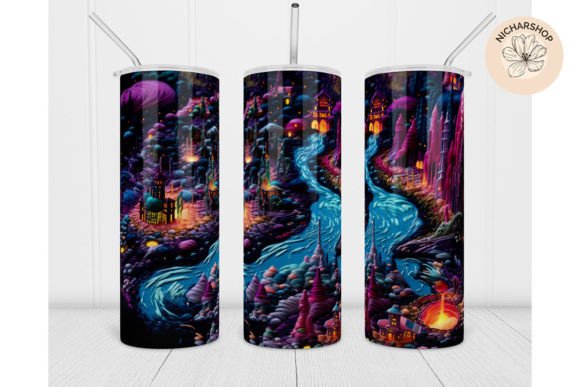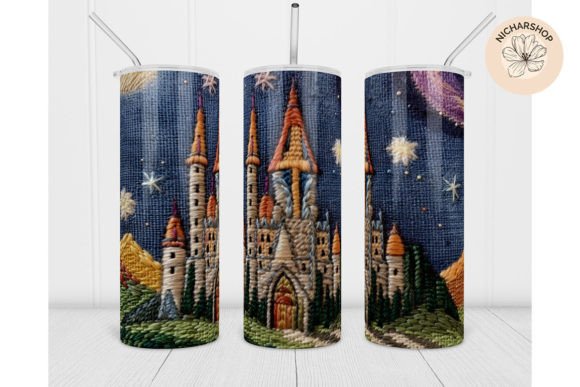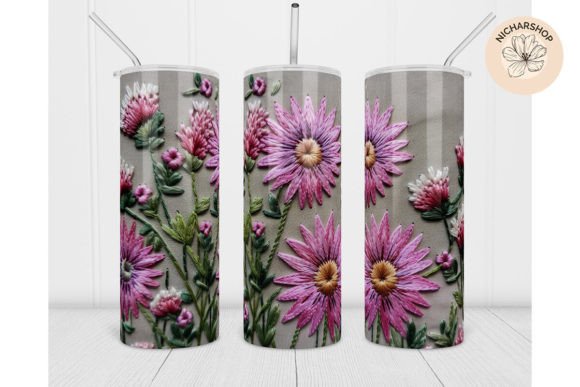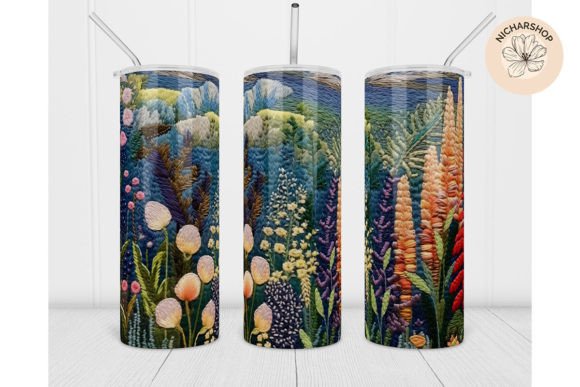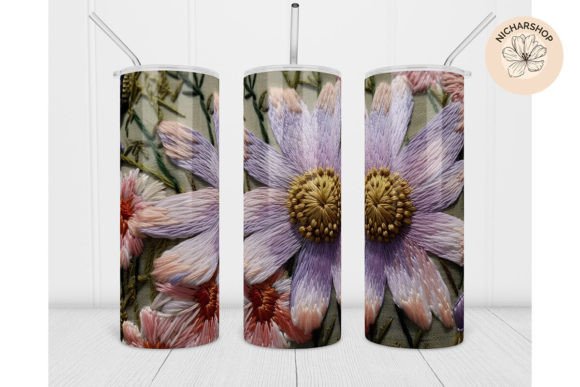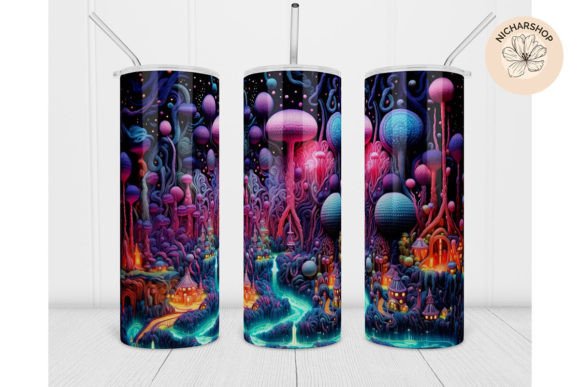
20oz 3D Fantacy Embroidery Tumbler Wrap
Let’s be clear from the start: the 20oz 3D Fantacy Embroidery Tumbler Wrap isn’t a physical tumbler, nor is it an embroidery file in .dst, .pes, or .jef format. It’s a digital PNG—two high-res (300 DPI) files meant for sublimation or graphic design use. As someone who’s digitized, stitched, and sold hundreds of embroidery designs over 12 years, I immediately paused when I saw this listed under Print Templates. My first thought? “This needs careful translation before it ever hits a needle.”
First Impression: Whimsy with Weight
The moment I opened the PNGs, I felt the design’s personality: playful curves, layered dimensional shapes, and that unmistakable “tumbler wrap” silhouette—tall, gently tapered, with visual cues suggesting depth and volume. It doesn’t scream “embroidery-ready,” but it *does* whisper “great starting point for a custom embroidered tote bag or pillow cover.” The motif leans into fantasy-themed charm—think soft florals, subtle swirls, and rounded lettering—not sharp geometry or photorealism. That’s good news for stitchability: organic lines translate well to satin and fill stitch without excessive jump stitches or fragile details.
Where It Shines (and Where It Needs Help)
I tested the 20oz 3D Fantacy Embroidery Tumbler Wrap as inspiration for a small-batch holiday project: personalized baby onesies with embroidered applique accents. I traced the core shape into my digitizing software and rebuilt key elements using satin-stitched borders and low-density fill areas. On cotton interlock, it held up beautifully—soft, legible, and gift-ready. Customers responded warmly to the gentle 3D illusion; one even asked if it was “puff embroidery” (it wasn’t—but the design’s shading made them think so).
That said, don’t drop this PNG straight onto your embroidery machine. As a digital embroidery file, it’s not yet optimized. The original PNG lacks stitch direction logic, underlay planning, or density calibration. So while it works brilliantly as a Graphics asset for mockups, branding, or sublimated tumblers themselves, using it for actual stitching means digitizing it first—or partnering with a digitizer who understands how fantasy motifs behave on knit fabrics and curved surfaces like caps or sleeves.
Real-World Fit: What Projects Does It Elevate?
- Custom apparel: Works best on structured items—canvas tote bags, denim jackets, or medium-weight sweatshirts—where the design’s vertical flow mirrors natural garment lines.
- Baby embroidery & nursery decor: Its rounded, non-angular feel makes it ideal for onesies, burp cloths, and pillow covers—especially when paired with tone-on-tone thread for subtle luxury.
- Holiday & wedding gifts: Printed as a sublimated tumbler wrap, then paired with a hand-stitched monogram patch nearby? That’s boutique-level gifting. The design’s warmth reads as intentional, not generic.
- Etsy seller assets: Use the PNGs in your listing mockups. Buyers instantly “see” the product in context—no guesswork. That builds trust faster than any description.
Where to Proceed With Care
This design isn’t built for every surface. Avoid applying it directly—digitized or not—to:
- Stretchy fabrics (like jersey) without proper cutaway stabilizer—those curves can distort;
- Dark fabric backgrounds unless you test thread contrast thoroughly (light pastels may vanish);
- Tiny hoops (<5” diameter)—the vertical proportion demands breathing room;
- Layered garments (e.g., hoodies with pockets underneath) where bulk could lift the design;
- Products meant for frequent washing (like kitchen towels) unless stitch density is adjusted to prevent fraying at edges.
And yes—it’s tempting to slap this onto a cap front. Resist. Curved surfaces exaggerate distortion in un-digitized graphics. If you need a cap version, rebuild the layout with radial alignment and reduced height.
What It Adds to Your Handmade Product—and What It Doesn’t
The 20oz 3D Fantacy Embroidery Tumbler Wrap brings instant thematic cohesion. When used thoughtfully—as part of a coordinated set (e.g., matching embroidered tea towel + sublimated tumbler + printed gift tag)—it strengthens brand consistency and perceived value. Customers notice that intentionality. They’ll pay more for a handmade product that feels curated, not assembled.
But it won’t fix weak execution. A poorly stabilized stitch-out on thin fabric will still look amateurish—even with this charming design at its center. Likewise, mismatched thread colors or rushed hooping won’t be rescued by whimsy. This is a strong design asset, not a shortcut.
Practical Designer Notes Before You Stitch
- Always test on scrap fabric first—especially if pairing with textured weaves or blends.
- Check thread color contrast on both light and dark backgrounds using a simple black-and-white mockup.
- Review stitch density in your digitized version—fantasy motifs often benefit from slightly looser fills to avoid stiffness.
- Confirm hoop size compatibility before finalizing placement on garments or accessories.
- Inspect small details like inner swirls or fine outlines—they’re easy to lose in dense stitching.
- Use appropriate stabilizer: cutaway for knits, tear-away for stable wovens, and optional topping for pile fabrics.
- Verify licensing before selling finished items or reselling the design itself—this is a Print Templates download, not a commercial-use embroidery file out of the box.
In short: the 20oz 3D Fantacy Embroidery Tumbler Wrap is a thoughtful, mood-driven graphic—not a plug-and-play embroidery file. But in the hands of a discerning designer or craft business owner, it’s a quietly powerful tool. Used with intention, it elevates everything from a single embroidered patch to a full holiday collection. Just remember: great design starts with clarity—not just charm.