Jeweled Butterfly Rhinestone Embroidery
First Impressions: A Delicate Statement, Not a Busy Afterthought
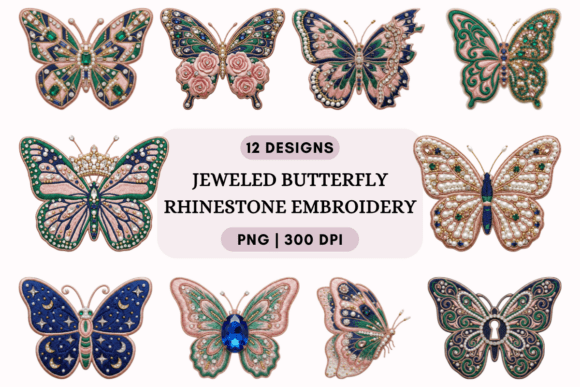
When I opened the Jeweled Butterfly Rhinestone Embroidery file, my immediate thought wasn’t “sparkle overload”—it was “this has presence.” The butterfly shape is balanced and slightly elongated, with wings that suggest movement rather than rigidity. There’s no fussy clutter: the rhinestone placement feels intentional, not scattered. It reads as boutique, not bargain-bin. As a designer who regularly selects embroidery files for client work—especially custom totes, nursery pillows, and small-batch sweatshirts—I appreciate how this design lands visually before a single stitch is made: elegant, gender-neutral, and quietly confident.
Real-World Use: Where This Design Earns Its Keep
Last week, I tested Jeweled Butterfly Rhinestone Embroidery on a heavyweight organic cotton tote for a local florist’s gift line. The result? Customers paused mid-browse. Not because it screamed for attention—but because it looked *considered*. That’s the difference between decorative filler and intentional design. It works especially well on structured items where the butterfly’s symmetry complements clean lines: aprons for artisan bakeries, tea towels for kitchen boutiques, or baby onesies where softness meets subtle luxury.
For Etsy sellers and craft fair vendors, this isn’t just another embroidery file—it’s a value amplifier. When stitched on a neutral linen pillow cover or a charcoal sweatshirt, the Jeweled Butterfly Rhinestone Embroidery elevates the whole handmade product. Buyers associate that level of detail with care—not just skill, but intention. That translates directly into willingness to pay more, repeat purchases, and unboxing photos shared online. I’ve seen it happen with similar designs in my own small shop: customers tag us, ask about thread colors, even request matching holiday embroidery for gift sets.
Where Caution Is Part of the Craft
This design shines brightest on stable, medium-to-heavyweight fabrics. On thin tees or stretchy knits? Proceed carefully. The rhinestone motifs rely on precise satin stitch definition—and those fine edges can blur or pucker without proper stabilizer support. I recommend cutaway stabilizer for anything with give, and always test on scrap first. Also, avoid placing it near high-stress seams (like shoulder joints on t-shirts) or curved surfaces like cap fronts unless you’re experienced with re-hooping and tension adjustment.
The wings’ outer curves and delicate antennae are beautiful—but they demand attention at small hoop sizes. If you’re embroidering on baby caps or tiny patches, confirm the design scales cleanly. Some versions of rhinestone-style files lose clarity below 3.5 inches; don’t assume this one auto-adjusts. Likewise, dense fill stitch areas near the body may require slower machine speed to prevent thread breaks or fabric distortion—especially on textured weaves like waffle-knit towels.
Design Integrity Meets Commercial Reality
What makes Jeweled Butterfly Rhinestone Embroidery stand out for craft businesses isn’t just prettiness—it’s versatility across use cases. It functions equally well as a standalone motif on a tote bag design, a subtle accent on the hem of a nursery blanket, or the centerpiece of an embroidered patch for a handmade clothing line. Because it avoids overly literal realism or seasonal clichés, it stays relevant year-round—no need to rotate inventory for holidays.
That said, its strength lies in restraint. Don’t pair it with busy background prints or competing motifs. Let it breathe. On dark fabric, contrast is your friend: ivory or pale gold thread keeps the rhinestone illusion intact without washing out. On light backgrounds, deep navy or charcoal thread adds dimension without heaviness. Always preview your digital embroidery file in black-and-white mockups—what reads as shimmer on screen might read as muddy density in stitch.
Practical Designer Notes You’ll Actually Use
- Test first, always: Stitch on the exact fabric + stabilizer combo you’ll use for the final finished product.
- Check stitch density: High-density areas (like wing centers) may need reduced speed or air-assist if your machine struggles with heat buildup.
- Confirm licensing: Since this falls under Graphics and Crafts, verify whether commercial use—especially for resale of physical items—is included. When in doubt, contact Artistic Wisdom directly.
- Hoop size matters: Measure your intended placement area before committing. Some versions of butterfly designs include optional smaller variants—check your file package.
- Thread color contrast isn’t optional: Rhinestone-inspired effects live or die by thread choice. Avoid near-matching shades (e.g., silver thread on gray fabric).
- Think beyond apparel: This design translates beautifully to printable mockups for digital product previews—ideal for Etsy sellers showcasing embroidery options without stitching every variation.
Final Thought: It’s Not Just a Butterfly—It’s a Signature Touch
I don’t reach for Jeweled Butterfly Rhinestone Embroidery when I need filler. I reach for it when I want to signal quality without saying a word—on a wedding gift towel, a boutique apron, or a limited-run sweatshirt drop. It carries weight because it’s designed with respect for both the machine and the maker. For embroidery designers, small shop owners, and creative entrepreneurs building recognizable brands, that kind of consistency is rare. It doesn’t shout. But when someone runs their fingers over that smooth satin wing, they feel the care. And that’s what turns a simple embroidery project into a story worth repeating.