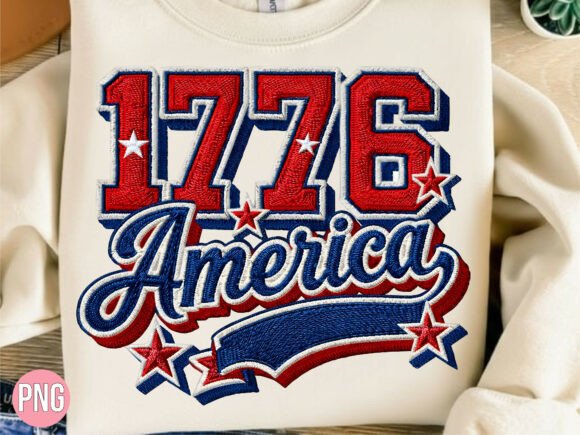
1776 America 3D Embroidery USA PNG
A Designer’s First Look: Bold, Patriotic, and Built for Impact
As an embroidery designer who’s stitched everything from delicate baby monograms to high-density commercial logos, my first impression of the 1776 America 3D Embroidery USA PNG was immediate: this isn’t just a graphic—it’s a statement. The design carries strong patriotic energy with dimensional layering that suggests depth even before digitizing. It reads clearly at a glance—ideal for quick recognition on apparel or home goods—but also invites closer inspection thanks to its balanced composition and intentional spacing between elements.
Where This Design Naturally Fits in Real Projects
I evaluated the 1776 America 3D Embroidery USA PNG for several upcoming client requests: a limited-run batch of organic cotton tote bags for a Fourth of July craft fair, a set of linen aprons for a local bakery’s seasonal promotion, and personalized sweatshirts for a small-town veterans’ group. Its visual weight and clean silhouette make it especially effective on medium-to-large surfaces—think center-chest placements on crewnecks, full-back embroidery on totes, or centered front panels on pillow covers. It also translates well to nursery decor and kitchen towels, where bold, uplifting graphics reinforce theme and warmth.
What You’ll Need to Know Before Digitizing
Important note: this is a PNG file, not a native machine embroidery file. That means it’s a high-resolution raster image (300 DPI), designed primarily for print, digital mockups, or as source material for professional digitizing. If you plan to use it for actual embroidery, you’ll need to convert it—or work with a digitizer—to create a stitch-ready file with proper satin stitch borders, fill stitch gradients, and running stitch underlay where needed.
The design includes layered text and symbolic elements (stars, banners, stylized typography) that suggest intentional texture and dimension. In practice, those features demand careful attention to stitch density and thread color contrast—especially when stitching on dark fabric or textured surfaces like terry cloth towels or fleece-lined caps.
Real-World Performance Across Common Products
- Tote bags & sweatshirts: Excellent visibility and scale. Works best with medium-to-heavy stabilizer to support dense areas without puckering.
- Baby blankets & nursery pillows: Softens nicely when digitized with gentle fill stitch transitions—just avoid overly tight satin edges near seams.
- Caps & curved surfaces: Requires thoughtful scaling and possibly simplified outlines. Test on scrap cap fabric first—the original PNG’s detail may compress unpredictably on small, rounded hoops.
- Kitchen towels & aprons: Holds up well after repeated washing if digitized with secure underlay and moderate density. Avoid excessive fill in star points to prevent stiffness.
- Embroidered patches: Highly suitable—its defined edges and balanced negative space help maintain crispness during heat-sealing or sew-on application.
Impact on Your Handmade Brand and Customer Experience
Using the 1776 America 3D Embroidery USA PNG thoughtfully elevates how customers perceive your handmade product—not just as craft, but as intentional design. When paired with quality materials and precise stitching, it strengthens brand consistency across Etsy listings, craft fair displays, and boutique wholesale lines. Buyers respond strongly to confident, cohesive visuals: a well-executed version of this design on a linen apron tells a story of heritage and care; on a baby blanket, it adds heirloom appeal without overwhelming delicacy.
For product photography, the design’s clarity and contrast make styling easier—no need for heavy filters or complex backdrops. And because it leans into timeless symbolism rather than fleeting trends, it supports long-term inventory planning and seasonal re-use (e.g., Memorial Day, Independence Day, Veterans Day).
Practical Notes Every Embroiderer Should Check
- Always test on scrap fabric—especially with stretchy knits or dark substrates. What looks sharp on screen may blur or fade without proper stabilizer or thread selection.
- Review stitch density carefully. Dense fills can stiffen lightweight fabrics or cause wear over time—adjust based on end use (e.g., softer fills for baby items).
- Confirm hoop size compatibility. The original PNG doesn’t specify dimensions, so scale deliberately—avoid pushing tiny lettering below 0.25” height unless using advanced digitizing techniques.
- Compare light vs. dark fabric mockups. Some elements (like subtle highlights or drop shadows in the PNG) won’t translate directly to thread—anticipate adjustments in contrast and layer order.
- Use appropriate stabilizer. Tear-away works well for stable wovens; cut-away is safer for knits or frequent-wash items like kitchen towels.
- Inspect small details post-stitch. Stars, serif terminals, and fine banner edges often need manual cleanup or re-hooping for precision.
- Verify licensing on Creative Fabrica. Since this falls under T-Shirt Designs and Graphics, confirm whether commercial embroidery rights are included—especially if selling finished embroidered goods.
Final Thoughts for Crafters and Small Business Owners
The 1776 America 3D Embroidery USA PNG isn’t a plug-and-play embroidery file—but it *is* a versatile, mood-rich design asset with real project potential. For embroidery designers, it’s a solid starting point for custom digitizing. For Etsy sellers and handmade shop owners, it offers recognizable, emotionally resonant imagery that supports storytelling and giftability. For apparel decorators and boutique merchandisers, it delivers consistent visual impact across multiple product categories—provided you invest time in thoughtful adaptation.
If you’re looking for a patriotic design that feels both classic and contemporary—and one that pairs well with natural fibers, neutral palettes, and artisanal presentation—the 1776 America 3D Embroidery USA PNG earns its place in your design assets library. Just remember: great embroidery starts with smart preparation, not just beautiful source files.