Faux Embroidery Black History PNG
First Impressions: A Thoughtful, Textured Tribute
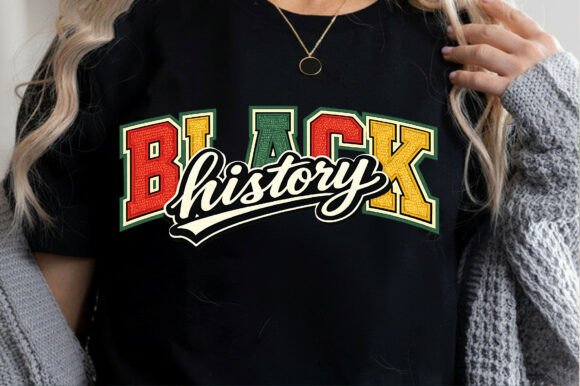
As an embroidery designer who’s stitched over 300 boutique collections—from heritage linen tees to heavyweight French terry hoodies—I opened Faux Embroidery Black History PNG expecting symbolism, not simulation. What I found was more intentional than I anticipated: a clean, typographic composition grounded in Pan African colors (red, black, green, and often gold accents), rendered with subtle 3D texture that mimics thread pile, shadow, and stitch direction—not as a flat graphic, but as a visual translation of craft. It doesn’t shout; it resonates. The layout feels balanced for chest placement—neither cramped nor sprawling—with letterforms that carry weight without heaviness. There’s a quiet confidence here: no ornamental flourishes, no forced “cute” motifs—just dignified typography dressed in the language of embroidery.
How It Lives on Real Sweatshirts
This isn’t just a T-Shirt Designs graphic—it’s a garment-native asset. On heather charcoal or deep navy sweatshirts, the Pan African color contrast pops with warmth and clarity. On oatmeal or soft sage pastels, the black and red elements anchor the design while green adds organic depth—ideal for seasonal capsule drops. Oversized hoodies? The scale holds beautifully at 4–5 inches wide—no distortion, no loss of legibility. And because the faux texture suggests raised stitching rather than ink saturation, it reads as handmade even before needle meets fabric. That tactile suggestion is gold for boutique brands positioning themselves at the intersection of intentionality and wearability.
Placement & Versatility Beyond the Chest
- Chest embroidery: Ideal centering—clean, respectful, and instantly readable at arm’s length.
- Sleeve accent: Crop the top line or isolate a single symbolic word (e.g., “Heritage” or “Rise”) for subtle sleeve branding—works especially well on rolled cuffs.
- Back design: Scale up thoughtfully—its typography-based structure allows graceful enlargement without pixelation, making it strong for full-back statements on cozy crewnecks or relaxed pullovers.
- Lifestyle photography: The 3D texture renders beautifully in natural light mockups—no flat “PNG glare.” It photographs like a finished product, boosting Etsy listing credibility and social proof for small shop product launches.
Design Integrity Meets Production Reality
Let’s talk like a working embroiderer—not a stock graphic curator. Faux Embroidery Black History PNG succeeds where many “embroidery style” graphics fail: it implies stitch logic. You can *see* where satin stitch would define letters, where fill stitch would build body, and where underlay might lift texture off dense fleece. That matters. When you convert this into a machine embroidery design, your digitizer won’t fight the art direction—they’ll amplify it.
Thread colors translate intuitively: true black for depth, vibrant red (like Sulky 1018 or Robison-Anton #71) for presence, rich forest green (#392 or #389) for grounding. No muddy blends. Stitch density feels moderate—not so dense it’ll stiffen lightweight French terry, not so sparse it’ll vanish on brushed cotton. For commercial embroidery on midweight sweatshirts (8–10 oz), a medium-weight cutaway stabilizer provides clean support without bulk. Hoop size? Likely fits comfortably in a 4×4 or 5×7—confirm before digitizing, but the composition suggests efficient use of space.
Small-Size Readability & Wash Durability
At 3 inches wide, key words remain crisp—no thin serifs or micro-details that blur when stitched. That’s critical for Etsy sellers offering youth sizes or petite cuts. And because the design avoids ultra-fine lines or delicate lace-like fills, it withstands repeated washing without fraying or “thread migration”—a real concern with low-density fills on high-shrink fabrics. This isn’t disposable decoration; it’s built to age alongside the garment.
Why This Elevates Your Boutique Brand
In a market flooded with generic “Black History Month” clipart, Faux Embroidery Black History PNG stands apart by honoring craft *and* culture—not as trend, but as continuity. When your customers see that textured, intentional execution on a hand-finished hoodie, they don’t just register a message—they feel the care behind it. That builds buyer trust faster than any banner sale.
For handmade product listings, it strengthens visual recognition: consistent Pan African color blocking + embroidery texture = instant brand signature across collections. For custom apparel partners, it signals professionalism—you’re not sourcing from free graphic sites; you’re investing in design assets with purpose-built structure. And for creative entrepreneurs building long-term identity? This design doesn’t date quickly. Its typography-first approach keeps it relevant beyond February—it works for Juneteenth launches, back-to-school merch, community workshops, or year-round pride essentials.
A Note to Digital Sellers & Crafters
If you’re an Etsy seller or digital embroidery file creator, treat Faux Embroidery Black History PNG as a foundational design asset—not just a one-off graphic. Pair it with coordinating motifs (think simplified Adinkra symbols or geometric borders) to build cohesive seasonal bundles. Use it in printable mockups to showcase versatility across fabric types. And always verify technical specs before production: confirm if the file includes transparent background, resolution (300 DPI minimum recommended), and whether vector variants are available for scalable embroidery digitizing.
This isn’t just another Graphics download. It’s a culturally grounded, production-smart starting point—one that respects both the wearer and the craftsperson. Done right, Faux Embroidery Black History PNG doesn’t just decorate a sweatshirt. It dignifies it.