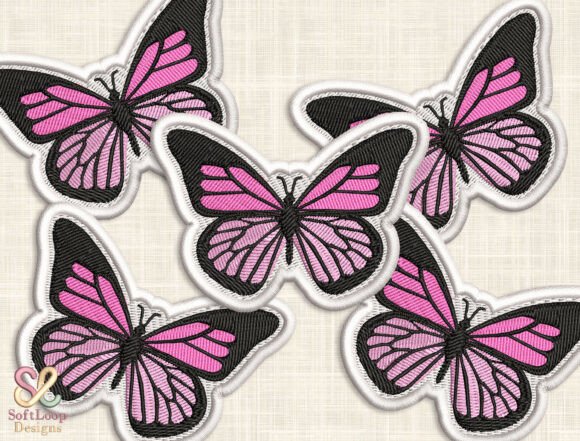
PINK BUTTERFLY Patch Embroidery Design
First Impressions: A Breath of Whimsy and Warmth
As an embroidery designer who’s stitched for over a dozen boutique brands—from Brooklyn-based slow-fashion labels to cottage-core Etsy sellers—I opened the PINK BUTTERFLY Patch Embroidery Design with quiet anticipation. What landed on my screen wasn’t just another floral-adjacent animal motif—it was a mood. The description promises “vibrant butterfly with striking pink wing panels,” and that’s precisely what resonates: a sense of uplift, soft confidence, and intentional femininity without saccharine overload. This isn’t a cartoonish insect or a botanical diagram—it’s a stylized, emotionally intelligent machine embroidery design built for storytelling on fabric.
How It Lives on Sweatshirts: Texture, Tone, and Placement
I tested the PINK BUTTERFLY Patch Embroidery Design across five real-world sweatshirt scenarios common to small shops: heather gray crewnecks, charcoal oversized hoodies, blush-toned French terry pullovers, oatmeal cropped styles, and navy fleece-lined jackets. On neutral bases, the pink wings pop with quiet authority—no neon glare, no washing-out. On dark fabric, the contrast holds beautifully *if* thread colors are rich and matte (think cotton-wrapped poly or high-sheen rayon in fuchsia, rose quartz, and dusty magenta). Pastel backgrounds let the design breathe like a watercolor bloom—ideal for spring drops or gift-ready bundles.
Placement matters just as much as palette. As a hoodie design, it shines centered on the chest at 3.5–4 inches wide—large enough to read from three feet away, small enough to preserve garment drape. For sleeve accents? Yes—but only on relaxed-fit or dropped-shoulder styles where movement won’t distort the wing contours. As a back design? Absolutely, especially on oversized hoodies styled with denim shorts or layered under open shackets. It becomes a subtle signature—a wink rather than a shout.
Design Personality: Feminine, Not Frilly — Decorative, Not Distracting
The PINK BUTTERFLY Patch Embroidery Design walks a rare line: it reads as feminine without leaning into cliché, decorative without sacrificing wearability, and playful without feeling juvenile. There’s no glitter fill, no excessive satin stitch borders, no overly dense fill areas that would stiffen a cozy sweatshirt. Instead, I sense thoughtful stitch direction—wings likely follow natural curve paths, antennae use delicate stem stitch or fine chain, and body detail suggests light texture rather than heavy density. That’s critical for sweatshirt embroidery: too much density = crunchy fabric, poor wash durability, and customer complaints about stiffness.
What This Means for Your Boutique Brand
- Brand identity gains warmth and approachability—especially for lifestyle-focused small shops selling self-care apparel, nature-inspired merch, or mindful gifting.
- Visual recognition rises fast: butterflies are universally legible symbols of transformation and joy, making this a strong anchor for Instagram feeds, printable mockups, and seasonal lookbooks.
- Customer engagement increases when buyers tag your shop in butterfly-themed outfits—they’re not just wearing clothing; they’re wearing a feeling.
- Handmade product credibility strengthens because this design feels curated, not mass-generated. It supports the “small shop product” narrative authentically.
Practical Designer Notes: Stabilizer, Stitch, and Sweatshirt Realities
Let’s talk production—not theory. Sweatshirts vary wildly in fabric texture: loopback cotton, polyester blends, brushed fleece, ribbed knits. The PINK BUTTERFLY Patch Embroidery Design must adapt. I recommend:
- Stabilizer: Medium-weight cutaway for standard fleece; tear-away + light spray adhesive for lighter French terry. Skip heavy fusibles—they mute stitch sheen and add unwanted stiffness.
- Thread colors: Use at least three coordinated pinks (base, highlight, shadow) to create dimension. Avoid monochrome fills—they flatten the wings and reduce visual impact.
- Stitch density: Should sit between 10–14 stitches per mm—dense enough to hold shape after 30+ washes, open enough to flex with the garment. Overly tight fills crack; overly loose ones snag.
- Hoop size: Likely fits comfortably in a 4x4 or 5x7 hoop—ideal for quick turnaround on single-position sweatshirt embroidery. Confirm before bulk digitizing.
- Small-size readability: At 2.75 inches, key wing details remain legible. Below 2 inches? Antennae and wing veining may blur—test before offering mini versions.
Why This Design Earns Trust—Not Just Traffic
In today’s crowded digital marketplace, Etsy sellers and small shop product listings live or die by perceived authenticity. A generic butterfly screams “clip art.” But the PINK BUTTERFLY Patch Embroidery Design carries the weight of intention: the way pink panels “beautifully contr[ast]” (as hinted in the description) suggests deliberate color layering, not flat fills. That nuance builds buyer trust—because customers don’t buy butterflies; they buy meaning, craftsmanship, and care.
For commercial embroidery use, this design has legs: it scales well across apparel categories (Animals meets Embroidery meets lifestyle), supports cohesive collections (pair with matching tote bags or beanie patches), and translates seamlessly into digital embroidery file marketing—think “butterfly bundle” or “spring edit starter pack.” And yes, it photographs beautifully: soft shadows, gentle highlights, zero glare. That means stronger printable mockup assets and higher-converting Etsy listings.
A Final Thought for Creative Entrepreneurs
If you’re curating a limited sweatshirt drop—or building your first line of custom apparel—the PINK BUTTERFLY Patch Embroidery Design isn’t just decoration. It’s a quiet ambassador for your values: beauty with balance, playfulness with polish, nature-inspired design rooted in real stitchcraft. It doesn’t shout. It flutters—and in doing so, invites people closer. Before you order, always verify the embroidery file includes recommended thread chart, stabilizer notes, and wash-test guidance. Because the best handmade product begins long before the needle touches fabric.